
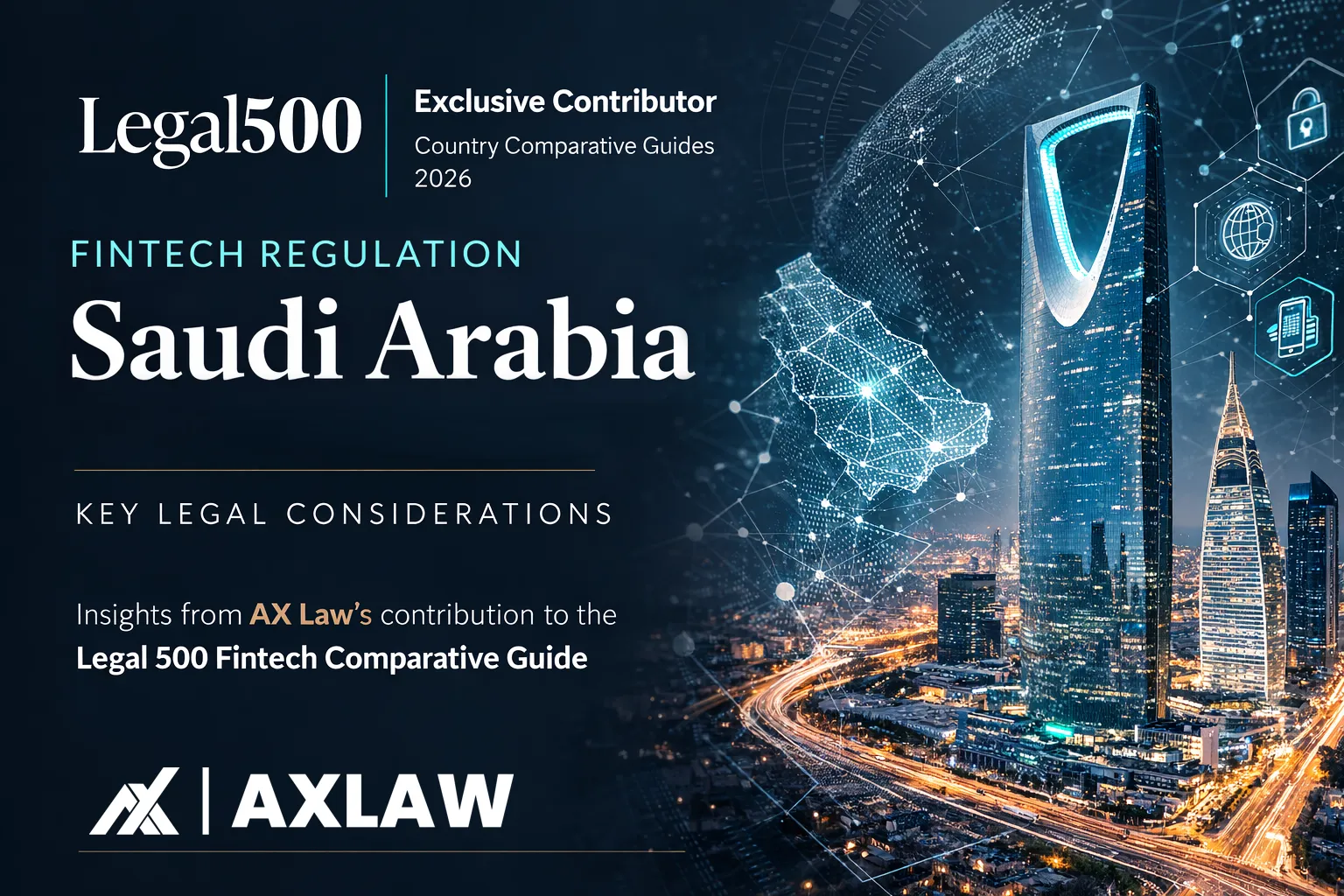
Insights from AX Law’s contribution to the Legal 500 Fintech Comparative Guide
Introduction
Saudi Arabia’s fintech sector continues to evolve rapidly as regulators introduce structured legal frameworks designed to support financial innovation while maintaining strong regulatory oversight.
As part of the latest Legal 500 Fintech Comparative Guide, AX LAW contributed the Saudi Arabia chapter, providing a practical overview of the regulatory environment governing fintech activities in the Kingdom.
The chapter was authored by Karim Fawaz, Partner at AX LAW, together with Joelle Jleilaty, Associate, reflecting the firm’s experience advising fintech companies, financial institutions, and investors across the region.
Growth of Fintech in Saudi Arabia
Saudi Arabia has positioned itself as one of the leading fintech markets in the Middle East, supported by national initiatives such as Vision 2030 and the expansion of digital financial services.
Government-backed programs, regulatory innovation, and strong investment activity continue to accelerate the development of:
-
payment solutions
-
digital banking platforms
-
alternative financing models
-
fintech infrastructure and regulatory sandbox initiatives
The Kingdom’s regulatory strategy aims to encourage innovation while safeguarding financial stability and consumer protection.
Key Regulatory Authorities
Fintech activities in Saudi Arabia are primarily regulated by:
-
Saudi Central Bank (SAMA)
-
Capital Market Authority (CMA)
These authorities oversee licensing frameworks, compliance obligations, supervision, and market conduct requirements applicable to fintech businesses operating in the Kingdom.
Fintech Licensing and Compliance Requirements
Companies seeking to operate in Saudi Arabia must comply with specific licensing requirements depending on the nature of their activities.
Regulatory pathways may include:
-
payment services licensing frameworks
-
digital banking regulatory regimes
-
investment platform and crowdfunding regulations
-
participation in regulatory sandbox programs
Understanding and meeting these regulatory requirements is essential for fintech companies planning market entry or expansion within Saudi Arabia.
Key Legal Considerations for Fintech Companies
Fintech companies entering the Saudi fintech ecosystem should carefully assess a number of legal and regulatory considerations, including:
-
licensing and regulatory approvals
-
data protection and cybersecurity obligations
-
financial services compliance requirements
-
cross-border financial transaction regulations
Strategic legal planning and regulatory engagement play a critical role in ensuring successful fintech deployment and long-term operational continuity.
Conclusion
Saudi Arabia continues to develop a progressive regulatory environment aimed at supporting fintech innovation while maintaining robust supervisory standards.
Through its contribution to the Legal 500 Fintech Comparative Guide, AX LAW highlights key regulatory considerations and provides insights for companies navigating the evolving fintech landscape in the Kingdom.
To read the full Saudi Arabia chapter, download the Legal 500 Fintech Comparative Guide.
